When I worked for a Greek family a few years ago, I had a few times when words from Greek or another language would be discovered to be similar to a word in Polish.
One day, my Greek boss was on the phone talking very loudly to a customer. I knew the customer was an older Greek gentleman, having met him before myself.
From his office, I heard, "Rucha! Rucha! Ochi! Rucha! (blahblahblah Greek words) Ru-cha!"
The first time, I didn't pay attention, I had a lot of work to do.
The second time, I blinked, turned and shook my head. No, I heard that wrong.
The third time, No, it must mean something else. Those Greek words sometimes don't sound the way I think they do, especially with an American accent.
The fourth time, No, No, I'm hearing this right, I think.
After a few minutes of hearing this word again and again, I couldn't take it anymore. I walked into his office and said, "Excuse me, but can you please tell me what Rucha means in Greek?"
He stopped, glanced at my very red blushing face, covered the phone's mouthpiece and said, "Clothes. Why?"
I started laughing, shook my head, and said, "That's not what it means in Polish. OK, thanks."
I later explained to him what it meant when he wasn't on the phone.
There is a rhyme, a very ugly one, in Polish. Mucha rucha karalucha. I don't want to translate it...
I suppose this was the equivalent of when I was yelling at a man on the phone from a country in Africa who's nickname was Mouni. A group of Greek men came in the office mid-conversation, paused, looked at me with confusion and then smiled, saying something in Greek to each other while laughing, and went to meet with one of the Greek family I worked for.
Later, I was told that "Mouni" in Greek means a particular body part. Super, no?
It explained why those Greek men wanted me to eat lunch with them later that day. And asked if my blonde hair was natural. I have to wonder what they thought with me wearing a wedding ring and saying that. Or, perhaps, it's better not to wonder.
Have you ever had a situation where an innocent word in one language was taken to mean something inappropriate in another language?
Na razie...

A Mama born in Poland with "Gypsy Blood" living on the American Prairie with her daughters, two future Miss Poland and Nobel Peace prize recipients :: Food, Travel, Life...
Showing posts with label Polish Language. Show all posts
Showing posts with label Polish Language. Show all posts
28 July 2011


24 June 2011
Slimak, Slimak: Polish Children's Rhyme
My daughters love this rhyme and sign it every time they see a snail.
One of the fondest memories I have of either of them singing it is from when I took my older daughter to Poland to bury my Dziadek. At my cousin's garden, a mulch pile was covered in big fat snails. They were the snails which are regularly harvested in Poland for the French.
My cousin's daughter quickly squatted down to be close to the snails and sang:
Ślimak, ślimak wystaw rogi,
Dam ci sera na pierogi,
Jak nie sera, to kapusty,
Od kapusty będziesz tłusty
My older glanced at me and I translated for her:
Snail, Snail, show your horns,
I'll give you cheese for pierogi,
If not cheese, then cabbage,
From cabbage you'll be fat...
She promptly squatted down next to her cousin and they chanted the rhyme together again.
I turned my pregnant eyes from the snails after whispering, "You be glad I have no butter and garlic on me right now."
Another Polish Children's Nursery Rhyme About a Miscu...
Mom Photographer's Slimak post which originally inspired me
One of the fondest memories I have of either of them singing it is from when I took my older daughter to Poland to bury my Dziadek. At my cousin's garden, a mulch pile was covered in big fat snails. They were the snails which are regularly harvested in Poland for the French.
My cousin's daughter quickly squatted down to be close to the snails and sang:
Ślimak, ślimak wystaw rogi,
Dam ci sera na pierogi,
Jak nie sera, to kapusty,
Od kapusty będziesz tłusty
My older glanced at me and I translated for her:
Snail, Snail, show your horns,
I'll give you cheese for pierogi,
If not cheese, then cabbage,
From cabbage you'll be fat...
She promptly squatted down next to her cousin and they chanted the rhyme together again.
I turned my pregnant eyes from the snails after whispering, "You be glad I have no butter and garlic on me right now."
Another Polish Children's Nursery Rhyme About a Miscu...
Mom Photographer's Slimak post which originally inspired me
15 June 2011
Wordless Wednesday: Wierzba
Taken with my phone yesterday on a stroll with my children around a lake surrounded with very old willow trees...
On the way there and back home, we listened to some Chopin, because I thought ahead. And we talked about a krasnoludek hole we saw, some of the places in Poland where we had seen Wierzbi, how the walk around the lake reminded us of Wroclaw in some places, that the bark could be used for fevers, about Rusalki, and going to the Chicago Botanical Garden...

On the way there and back home, we listened to some Chopin, because I thought ahead. And we talked about a krasnoludek hole we saw, some of the places in Poland where we had seen Wierzbi, how the walk around the lake reminded us of Wroclaw in some places, that the bark could be used for fevers, about Rusalki, and going to the Chicago Botanical Garden...
Wierzba is pronounced with the "rz" sound as a "z" pronounced with tongue in same position as if you were rolling your "r".
03 June 2011
A Children's Rhyme in Polish About a Miscu
I remember singing this with my mother and brother while holding her hand. The pavement curves in front of us, leading toward my elementary school. Birds sing and the air is cool.
"Jedziemy na wycieczkę,
bierzemy misia w teczkę.
A misiu - jak to misiu,
do teczki zrobił si-siu.
A teczka była chora,
więc poszła do doktora.
A doktor był pijany,
przykleił się do ściany.
A ściana była mokra,
przykleił się do okna.
A okno było duże,
wyleciał na podwórze.
Znalazły go tam dzieci,
wrzuciły go do śmieci.
A w śmieciach były szczury,
wygryzły mu pazury.
I doktor wreszcie wrócił,
na podłogę się rzucił.
A teczka boląc noga,
poszła do psychologa.
A doktor myśląc może,
chorobę przyniósł w worze.
A teczka nic nie wiedząc,
z doktorem siedząc...
Misiek strasznie pierdzi,
i mówię że to śmierdzi.
Więc przynieś butlę z tlenem,
wieczorem i też ranem.
My brother and I would giggle everytime.
Translation without rhyming:
"We’re going on a tour (trip),
We’re taking Teddy Bear in the suitcase/basket
But Teddy Bear like a Teddy Bear,
In the Suitcase/basket made pee-pee (cue children’s crazy giggling)
The Suitcase/Basket was sick,
So it was taken to the doctor.
The Doctor was drunk,
Glued her (the suitcase/basket) to the wall. (Again, the giggling)
But the wall was wet,
So he (that crazy drunk Doctor) glued her (the suitcase/basket) to the window.
But the window was big,
So he (drunk Doctor) threw her (the suitcase/basket) outdoors/into the yard.
She (the suitcase/basket) was found by children,
Returned her (the poor peed on and sick suitcase/basket) to the trash.
And in the trashcan were rats,
They bit his (the suitcase/basket is apparently a boy now, I don’t know, just keep reading) claws.
And the Doctor finally returned,
On the floor he threw her (the suitcase/basket is back to being feminine now).
The suitcase/basket’s foot hurt,
So she (the suitcase/basket) went to a psychologist.
The doctor thought that maybe,
The sickness he carried in a cloth sack (I’m lost at this point).
But the suitcase/basket knowing nothing,
Is sitting with the Doctor….
The Teddy Bear terribly farts,
And says that this stinks.
So bring a bottle of Oxygen,
For the evening and also morning."
I hope you enjoyed that. Na razie...

"Jedziemy na wycieczkę,
bierzemy misia w teczkę.
A misiu - jak to misiu,
do teczki zrobił si-siu.
A teczka była chora,
więc poszła do doktora.
A doktor był pijany,
przykleił się do ściany.
A ściana była mokra,
przykleił się do okna.
A okno było duże,
wyleciał na podwórze.
Znalazły go tam dzieci,
wrzuciły go do śmieci.
A w śmieciach były szczury,
wygryzły mu pazury.
I doktor wreszcie wrócił,
na podłogę się rzucił.
A teczka boląc noga,
poszła do psychologa.
A doktor myśląc może,
chorobę przyniósł w worze.
A teczka nic nie wiedząc,
z doktorem siedząc...
Misiek strasznie pierdzi,
i mówię że to śmierdzi.
Więc przynieś butlę z tlenem,
wieczorem i też ranem.
My brother and I would giggle everytime.
Translation without rhyming:
"We’re going on a tour (trip),
We’re taking Teddy Bear in the suitcase/basket
But Teddy Bear like a Teddy Bear,
In the Suitcase/basket made pee-pee (cue children’s crazy giggling)
The Suitcase/Basket was sick,
So it was taken to the doctor.
The Doctor was drunk,
Glued her (the suitcase/basket) to the wall. (Again, the giggling)
But the wall was wet,
So he (that crazy drunk Doctor) glued her (the suitcase/basket) to the window.
But the window was big,
So he (drunk Doctor) threw her (the suitcase/basket) outdoors/into the yard.
She (the suitcase/basket) was found by children,
Returned her (the poor peed on and sick suitcase/basket) to the trash.
And in the trashcan were rats,
They bit his (the suitcase/basket is apparently a boy now, I don’t know, just keep reading) claws.
And the Doctor finally returned,
On the floor he threw her (the suitcase/basket is back to being feminine now).
The suitcase/basket’s foot hurt,
So she (the suitcase/basket) went to a psychologist.
The doctor thought that maybe,
The sickness he carried in a cloth sack (I’m lost at this point).
But the suitcase/basket knowing nothing,
Is sitting with the Doctor….
The Teddy Bear terribly farts,
And says that this stinks.
So bring a bottle of Oxygen,
For the evening and also morning."
I hope you enjoyed that. Na razie...
23 May 2011
Teaching My Children Polish
I am not a teacher. I am not organized perfectly in my daily schedule. I also have no idea what I am doing. But that has never stopped me in anything I felt passionately about.
The other day, I met a woman, who within 10 minutes told me my children will never learn Polish. This woman caught me on a day when I was missing the neighborhood and state where I had grown up. It was a very long winter and I have not yet found a good support system here with fellow mothers who I could relate to. So, I left the library after my conversation with her, shaken, fairly upset, and disgusted.
Disgusted that she was Polish like me. Disgusted that she dared to judge me within such a short span of time. Disgusted because she was not me, she was not my mother, she was nobody. Yet she thought she could drop such a statement about my children. I hope it made her feel superior.
I have since discussed this conversation with the people who matter to me who also know a bit about my Polish background, about other Poles, and Polish society. And I have come to the conclusion that this woman was from a small village, based on her accent and mannerisms. She came over as an adult so she did not have to master 3 languages by the time she was 3 years old, like I did. She has no idea anything about me and I could care less to know about her. I also reaffirmed to myself that she was not every Pole, she was just a random person.
My encounter with her reminded me of another such experience I had in a village in Eastern Poland when I was a young teenager. We were visiting another Ciocia of mine who had moved there after marrying her husband. It was my first trip back to Poland.
My cousin and I had gotten along fabulously. Some of her friends were hanging out as teenagers all over the world might. At twilight, in a field, around a bonfire, and we were invited. Everyone was very curious about me, as I was the only one from America they had ever met, which was understandable.
I was asked many questions by her friends and I answered them honestly. After a few questions, it became obvious that I was indeed human and we began to talk about music, clothes, the mosquitoes biting us.
One boy in the group, however, decided I was not Polish. I did not speak Polish. Yet the entire conversation, thus far, had been in Polish as none of them spoke English. And after all, we were in Poland, what other language would we speak?
His point, he felt was driven home, when he asked me what a bowl was which he held in his hand and pointed to.
"Co to jest?" He asked smugly.
I answered, "To miska."
He waved his hands in the air and told everyone, "Widzisz?"
Apparently, in that village, a bowl goes by a different word which I had never heard before. I tried to tell him that I knew it as "miska" and that I did speak Polish but I lived in a different country where I knew nobody else who spoke Polish and there were no Polish schools around me.
My cousin chimed in, saying that in different regions and villages in Poland, just like in other countries, some words are different. In Wroclaw and the area around Wroclaw, the word for bowl was "Miska". And she knew this because she had family there and had gone there.
At first, he was insistant in his conclusion. I was not Polish, I didn't speak Polish. After a while, however, the conversation changed because another friend of my cousin told him to shut up and get over it, obviously I was Polish, we were all obviously speaking Polish. And he was asked if he spoke another language, which he didn't. He looked sheepish and apologized and we continued to enjoy ourselves.
On the way back to my Ciocia's apartment, he held my hand and told me that even though I was American, I was very pretty. My cousin held his other hand, I think to keep him from getting silly ideas.
This hand holding was later on explained to me by my mother as a bit of a scandal. Girls didn't hold boys hands unless they were dating. My cousin again chimed in to my aid that she as well had held his hand and that it was just children holding children's hands. She was very sweet. I wish I knew where she lived now so I could talk to her.
I think that woman in that library was like that boy. Except she wasn't a boy talking to a girl, she was a grown up who felt important at her job and in her mediocre life, who felt that she knew who I was. She didn't, obviously.
Today, my oldest daughter is in a Catholic school, learning about the Czech Republic for a presentation her class will be doing. When she comes home from school, she will be cleaning her room on her own then snacking on pasztet smeared on whole wheat crackers, drinking carrot peach apple juice from the polish store and watching Mickey Mouse on youtube. In Polish. Because that is typical in my house.
My children have no foundation, that woman said.
Their middle names represent very special moments in my life that occurred in Poland and I tell them about it all the time. At bedtime, we exchange "Dobranoc, Cie Kocham, Buska"'s with their "Dziadek". Twice a week, they hear me on the phone for at least one hour at a time talking to my Babcia and Ciocia, in Polish. On the way to and from school, they listen to Polish radio or C.D.'s. My older daughter looks through Polish books and begs me to read them. This coming summer, she will be practicing in workbooks that my Babcia had sent her, in Polish. I plan to take them to Poland every other year. I could go on and on.
Sure, I twist my endings and have a definite American accent when I speak Polish. Yes, I doubt my skills in speaking Polish. And yes, a few Polish people will never embrace me as Polish simply because they are jealous or cannot grasp that I left as a very small child.
But I am Polish. Living in America. And anything can happen. After all, Poles are a nation of people who know how to push through adversity and Americans know how to grab the bull by the horn. Between the two, I think my children will be alright.

The other day, I met a woman, who within 10 minutes told me my children will never learn Polish. This woman caught me on a day when I was missing the neighborhood and state where I had grown up. It was a very long winter and I have not yet found a good support system here with fellow mothers who I could relate to. So, I left the library after my conversation with her, shaken, fairly upset, and disgusted.
Disgusted that she was Polish like me. Disgusted that she dared to judge me within such a short span of time. Disgusted because she was not me, she was not my mother, she was nobody. Yet she thought she could drop such a statement about my children. I hope it made her feel superior.
I have since discussed this conversation with the people who matter to me who also know a bit about my Polish background, about other Poles, and Polish society. And I have come to the conclusion that this woman was from a small village, based on her accent and mannerisms. She came over as an adult so she did not have to master 3 languages by the time she was 3 years old, like I did. She has no idea anything about me and I could care less to know about her. I also reaffirmed to myself that she was not every Pole, she was just a random person.
My encounter with her reminded me of another such experience I had in a village in Eastern Poland when I was a young teenager. We were visiting another Ciocia of mine who had moved there after marrying her husband. It was my first trip back to Poland.
My cousin and I had gotten along fabulously. Some of her friends were hanging out as teenagers all over the world might. At twilight, in a field, around a bonfire, and we were invited. Everyone was very curious about me, as I was the only one from America they had ever met, which was understandable.
I was asked many questions by her friends and I answered them honestly. After a few questions, it became obvious that I was indeed human and we began to talk about music, clothes, the mosquitoes biting us.
One boy in the group, however, decided I was not Polish. I did not speak Polish. Yet the entire conversation, thus far, had been in Polish as none of them spoke English. And after all, we were in Poland, what other language would we speak?
His point, he felt was driven home, when he asked me what a bowl was which he held in his hand and pointed to.
"Co to jest?" He asked smugly.
I answered, "To miska."
He waved his hands in the air and told everyone, "Widzisz?"
Apparently, in that village, a bowl goes by a different word which I had never heard before. I tried to tell him that I knew it as "miska" and that I did speak Polish but I lived in a different country where I knew nobody else who spoke Polish and there were no Polish schools around me.
My cousin chimed in, saying that in different regions and villages in Poland, just like in other countries, some words are different. In Wroclaw and the area around Wroclaw, the word for bowl was "Miska". And she knew this because she had family there and had gone there.
At first, he was insistant in his conclusion. I was not Polish, I didn't speak Polish. After a while, however, the conversation changed because another friend of my cousin told him to shut up and get over it, obviously I was Polish, we were all obviously speaking Polish. And he was asked if he spoke another language, which he didn't. He looked sheepish and apologized and we continued to enjoy ourselves.
On the way back to my Ciocia's apartment, he held my hand and told me that even though I was American, I was very pretty. My cousin held his other hand, I think to keep him from getting silly ideas.
This hand holding was later on explained to me by my mother as a bit of a scandal. Girls didn't hold boys hands unless they were dating. My cousin again chimed in to my aid that she as well had held his hand and that it was just children holding children's hands. She was very sweet. I wish I knew where she lived now so I could talk to her.
I think that woman in that library was like that boy. Except she wasn't a boy talking to a girl, she was a grown up who felt important at her job and in her mediocre life, who felt that she knew who I was. She didn't, obviously.
Today, my oldest daughter is in a Catholic school, learning about the Czech Republic for a presentation her class will be doing. When she comes home from school, she will be cleaning her room on her own then snacking on pasztet smeared on whole wheat crackers, drinking carrot peach apple juice from the polish store and watching Mickey Mouse on youtube. In Polish. Because that is typical in my house.
My children have no foundation, that woman said.
Their middle names represent very special moments in my life that occurred in Poland and I tell them about it all the time. At bedtime, we exchange "Dobranoc, Cie Kocham, Buska"'s with their "Dziadek". Twice a week, they hear me on the phone for at least one hour at a time talking to my Babcia and Ciocia, in Polish. On the way to and from school, they listen to Polish radio or C.D.'s. My older daughter looks through Polish books and begs me to read them. This coming summer, she will be practicing in workbooks that my Babcia had sent her, in Polish. I plan to take them to Poland every other year. I could go on and on.
Sure, I twist my endings and have a definite American accent when I speak Polish. Yes, I doubt my skills in speaking Polish. And yes, a few Polish people will never embrace me as Polish simply because they are jealous or cannot grasp that I left as a very small child.
But I am Polish. Living in America. And anything can happen. After all, Poles are a nation of people who know how to push through adversity and Americans know how to grab the bull by the horn. Between the two, I think my children will be alright.
18 March 2011
Asparagus a la polonaise (z bulki tarta)
I have written before about making an a la polonaise topping, also known as "z bulki tarta" (pronounced "Z Boo-w-kee Tah-r-taom" and meaning "with bread crumbs"). I wanted to show an example of a vegetable with the topping.
Asparagus should be cooked as usual, with a wide 2-3 inch frying pan filled to about 1/2 way with boiling water, a pinch of salt and a pinch of sugar. After trimming the wooden ends off and cutting an "X" into the bottoms of the wider stalks, boil for3-5 minutes until tender. Top with the a la polonaise topping, to which I recommend a 1/2 lemon's juice for complimenting the taste of the Asparagus.

Smacznego!
Asparagus should be cooked as usual, with a wide 2-3 inch frying pan filled to about 1/2 way with boiling water, a pinch of salt and a pinch of sugar. After trimming the wooden ends off and cutting an "X" into the bottoms of the wider stalks, boil for3-5 minutes until tender. Top with the a la polonaise topping, to which I recommend a 1/2 lemon's juice for complimenting the taste of the Asparagus.

Delicious and many people who hate vegetables, including my older daughter, will eat it quite willing!Smacznego!
01 March 2011
Spinach in the Polish Style or Szpinak po Polsku
I love cooking with what I have. Going to the grocery store, seeing what is fresh, on sale, or just appealing to me, and taking it home to make something different. Something tasty. And preferably, something traditional.
Sometimes, though, I don't know exactly what to do with the produce. But I have, without exaggeration, 17 cookbooks, 6 of which are in Polish and I am always looking for more. This time, I looked up Szpinak (pronounced "Sh-pee-nahk" and meaning "Spinach") in my Kuchnia Polska tradycyjna book.
And found Szpinak po Polsku (pronounced "Poh Pohl-skoo" and meaning "in Polish style"), which struck me as being very much like Creamed Spinach. I wasn't sure if I had ever had it this way before. My father wasn't sure either, his response was "I should have but I don't know." Of course, once I made it, everyone thought it looked and tasted delicious.
And the kids? They gobbled it up. My older child said it was "now officially on her list of favorite foods." Here is the way I made it, based on the recipe from the book. Next time, I think I will use less milk, and maybe try a small amount with white vinegar, just to see.
Ingredients:
2 bunches of Spinach (or roughly 4 lbs.)
1 Tablespoon Flour
A few Tablespoons Milk (I used about 8 this time)
Salt
1 Egg
1 Tablespoon Butter
Optional: A Tablespoon of White Vinegar or Lemon Juice
Wash Spinach, sort, and tear off stems. Toss into a boiling pot of water and allow to cook for a minute. Remove. Allow water to return to a boil. Toss back in and cook for a minute. Remove. Do this a few times. This is according to the recipe. I'm not exactly sure the purpose of doing it this way but it might be to cook the spinach and remove bitterness without overcooking or losing the shape, texture, or color of the spinach and turning it into mush.

The last time (I did it about 6 times), take out and drain well, allowing to cool. Use a sharp knife to cut up Spinach into smaller pieces.

In a large saucepan, mix Flour with cold Milk well. Heat for a few minutes until thickened and cook for an additional couple of minutes, stirring constantly. (Can you say "Country Gravy"?)

Add Salt to taste. Add Spinach and mix in.

At this point, if you like, you can add an Egg and mix in, heating gently until protein is cooked. I really liked the addition of the Egg in this, personally.

Just before serving, add a Tablespoon of Butter and mix in gently.

Smacznego!
Sometimes, though, I don't know exactly what to do with the produce. But I have, without exaggeration, 17 cookbooks, 6 of which are in Polish and I am always looking for more. This time, I looked up Szpinak (pronounced "Sh-pee-nahk" and meaning "Spinach") in my Kuchnia Polska tradycyjna book.
And found Szpinak po Polsku (pronounced "Poh Pohl-skoo" and meaning "in Polish style"), which struck me as being very much like Creamed Spinach. I wasn't sure if I had ever had it this way before. My father wasn't sure either, his response was "I should have but I don't know." Of course, once I made it, everyone thought it looked and tasted delicious.
And the kids? They gobbled it up. My older child said it was "now officially on her list of favorite foods." Here is the way I made it, based on the recipe from the book. Next time, I think I will use less milk, and maybe try a small amount with white vinegar, just to see.
Ingredients:
2 bunches of Spinach (or roughly 4 lbs.)
1 Tablespoon Flour
A few Tablespoons Milk (I used about 8 this time)
Salt
1 Egg
1 Tablespoon Butter
Optional: A Tablespoon of White Vinegar or Lemon Juice
Wash Spinach, sort, and tear off stems. Toss into a boiling pot of water and allow to cook for a minute. Remove. Allow water to return to a boil. Toss back in and cook for a minute. Remove. Do this a few times. This is according to the recipe. I'm not exactly sure the purpose of doing it this way but it might be to cook the spinach and remove bitterness without overcooking or losing the shape, texture, or color of the spinach and turning it into mush.

The last time (I did it about 6 times), take out and drain well, allowing to cool. Use a sharp knife to cut up Spinach into smaller pieces.

In a large saucepan, mix Flour with cold Milk well. Heat for a few minutes until thickened and cook for an additional couple of minutes, stirring constantly. (Can you say "Country Gravy"?)

Add Salt to taste. Add Spinach and mix in.

At this point, if you like, you can add an Egg and mix in, heating gently until protein is cooked. I really liked the addition of the Egg in this, personally.

Just before serving, add a Tablespoon of Butter and mix in gently.

Smacznego!
02 February 2011
Nalesniki z Serem or Polish Crepes/Pancakes with Cheese
This is actually a sweet dish. And is it gooooood...
There are many recipes for the batter but in the end, it's like Dessert Crepes.
Ingredients for Batter:
1 1/2 cups Milk
1 cup Flour (I used unbleached)
2 Eggs
2 tablespoons Sugar
1 tablespoon Melted Butter

Combine all ingredients in a bowl.

Mix really well. Make sure, if using a mixer, to scrape the bottom of the bowl a few times so that no flour clumps on the bottom.

A tip I learned from a French friend years ago, allow the batter to sit at room temperature for 1/2 an hour to an hour. In a medium sized frying pan, heat one tablespoon of oil and pour in a couple of tablespoons of batter. Immediately, twist pan around to evenly distribute batter. Heat until lightly golden brown (I constantly overcook them slightly, oops, I'm a Busy Mommy!) on one side.

I love the French saying "The first crepe goes to the dogs" since the first one absorbs the most oil and just doesn't quite turn out right...

Ingredients for Cheese Filling:
1 1/2 cups White Cheese (Farmers Cheese, Ricotta, or very dry Cottage Cheese)
1 Egg Yolk
1 teaspoon Vanilla Extract or Vanilla Sugar
Sugar
Zest from an Orange (or Lemon, if you like)
(See Notes)

Mix all ingredients together.
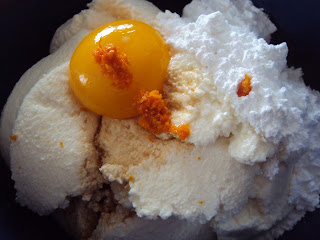
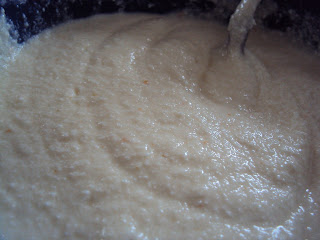
On the browned side of the crepes, smear filling as thick as you like. I usually do about one tablespoon.

Roll either into a burrito style shape or fold into a quarter.

At this point, you can set them aside with plastic wrap for later. Or you can brown slightly on each side and serve.

You can drizzle with fruit syrup, if you like, or sprinkle with powdered sugar. I buy mine from the local ethnic store (a Polish brand for about $3-4 for 1 Liter), which we also sometimes drizzle on ice cream, other desserts, mix into beer or other drinks, or dissolve into water for a different drink.

Smacznego!
Notes:
I cannot really tell you how much Sugar to use, since, according to my Babcia (and I agree), it depends on the cheese and how you like it. I used Ricotta cheese and 4 tablespoons of Powdered Sugar. Granulated Sugar can also be used.
I love the Polish language. My Babcia in telling me her recipe, said "Żółtko" (pronounced Zoo-TKOh, and meaning Egg Yolk), which always makes me think of "Złoto" (pronounced Zuoh-Toh, and meaning Gold).
Don't worry, a recipe for Vanilla Sugar will be coming soon.
If you liked this recipe, consider making a donation

There are many recipes for the batter but in the end, it's like Dessert Crepes.
Ingredients for Batter:
1 1/2 cups Milk
1 cup Flour (I used unbleached)
2 Eggs
2 tablespoons Sugar
1 tablespoon Melted Butter

Combine all ingredients in a bowl.

Mix really well. Make sure, if using a mixer, to scrape the bottom of the bowl a few times so that no flour clumps on the bottom.

A tip I learned from a French friend years ago, allow the batter to sit at room temperature for 1/2 an hour to an hour. In a medium sized frying pan, heat one tablespoon of oil and pour in a couple of tablespoons of batter. Immediately, twist pan around to evenly distribute batter. Heat until lightly golden brown (I constantly overcook them slightly, oops, I'm a Busy Mommy!) on one side.

I love the French saying "The first crepe goes to the dogs" since the first one absorbs the most oil and just doesn't quite turn out right...

Ingredients for Cheese Filling:
1 1/2 cups White Cheese (Farmers Cheese, Ricotta, or very dry Cottage Cheese)
1 Egg Yolk
1 teaspoon Vanilla Extract or Vanilla Sugar
Sugar
Zest from an Orange (or Lemon, if you like)
(See Notes)

Mix all ingredients together.


On the browned side of the crepes, smear filling as thick as you like. I usually do about one tablespoon.


At this point, you can set them aside with plastic wrap for later. Or you can brown slightly on each side and serve.


Smacznego!
Notes:
I cannot really tell you how much Sugar to use, since, according to my Babcia (and I agree), it depends on the cheese and how you like it. I used Ricotta cheese and 4 tablespoons of Powdered Sugar. Granulated Sugar can also be used.
I love the Polish language. My Babcia in telling me her recipe, said "Żółtko" (pronounced Zoo-TKOh, and meaning Egg Yolk), which always makes me think of "Złoto" (pronounced Zuoh-Toh, and meaning Gold).
Don't worry, a recipe for Vanilla Sugar will be coming soon.
If you liked this recipe, consider making a donation
How to Make Packet Kisiel
A Photographer/Blogger/Pole/Mom and I have been talking about Polish desserts lately. We talked about Budyn and Nalesniki and now, Kisiel.
I love Kisiel. It's a great way to get some sweetness packed with Vitamin C into your little ones. You can mix fruits into it if you like. It's inexpensive. And it's ridiculously easy to make. If you can boil water and stir, you can make packet Kisiel which can be bought at any Polish store, or other European stores. And on a cold day like this, a warm dessert is perfect for everyone.


Step 1:
Z 0,5 litra zimnej wody odlac pol szklanki.
From 0.5 liter (2 cups or 500 ml) of cold water pour out 1/2 cup (to the side).
Wsypac zawartosc torebki.
Pour in the powder from the packet (into the 1/2 cup of cold water).
Dobrze wymieszac.
Mix well.

Step 2:


Smacznego!
I love Kisiel. It's a great way to get some sweetness packed with Vitamin C into your little ones. You can mix fruits into it if you like. It's inexpensive. And it's ridiculously easy to make. If you can boil water and stir, you can make packet Kisiel which can be bought at any Polish store, or other European stores. And on a cold day like this, a warm dessert is perfect for everyone.

Again, I did not get any financial or gifts from this company. It's just the packet I have in my cabinet. And I wanted to translate it for others who cannot read Polish and are interested in making this at home.

Step 1:
Z 0,5 litra zimnej wody odlac pol szklanki.
From 0.5 liter (2 cups or 500 ml) of cold water pour out 1/2 cup (to the side).
Wsypac zawartosc torebki.
Pour in the powder from the packet (into the 1/2 cup of cold water).
Dobrze wymieszac.
Mix well.
Pozostala czesc wody zagotowac.
The remaining water (now 1 1/2 cups) bring to a boil.

Step 2:
Odsunac wode z ognia, wlac rozmieszany proszek.
Remove the water from heat, immediately add the dissolved powder.
Calosc chwile gotowac, ciagle mieszajac.
While still heating, mix the whole time. (I do this off the heat, personally)

Step 3:
Kisiel wlac do salaterek.
Put Kisiel into salad bowls.
Polecamy podawac ze swiezymi lub mrozonymi owocami.
We recommend serving with either fresh or frozen fruit mixed in. (I do too)


Smacznego!
26 January 2011
Polish Breaded Pork Chops or Kotlety Schabowe
Bang bang bang bang bang... I turn to my Babcia in her apartment in Poland, thinking I knew the answer but asking the question anyway, "Babciu, co to?" (Babcia, what's that?). My Babcia looks up, listens a moment, and says "Ktos robi Kotlety Schabowe na obiad." (Someone is making Pork Chops for dinner) She looks up again, listens and smiles distantly for a few moments. I watch her face and listen too, as the sound takes me back to my childhood. Probably it took her back to her own, as well...
Yesterday, I relived that memory. Bang bang bang bang, someone yells the anticipated joke "It's dead already!", knowing what that noise means. Kotlety Schabowe. My comfort food. Polish Breaded Pork Chops, which only gives you a hint about this dish.
I don't know any Pole who doesn't smile at the name of it. Some like it with Beets, others with Fried Cabbage, or Fried Carrots. Some with a Polish Dill Pickle, some without. But almost all with Mashed Potatoes and fond childhood memories.
Ingredients:
Pork Chops (with or without Bone in)
Egg, Beaten in bowl
Flour
Garlic Salt or table Salt
Pepper
Marjoram (if you like)
Caraway Seeds (if you like)
Plain Breadcrumbs
Oil for frying
Butter
Trim excess fat from the Pork chop. Some people at this point cut out the bone, as well, which can be used in Barszcz Czerwony. I leave it in but make sure not to hit it with the mallet.

Pound both sides until nice and tender with a meat mallet (on the side with the Tenderizer spikes). A tip for this, I usually wear an apron, standing with my body touching the clean counter. I also take large cups or bowls and put them around the area I plan to work, draping kitchen towels on them, to create a barrier and keep the meat juices from flying everywhere. I also make sure to not raise my mallet very high each time, as that causes meat juices to fly further around me.

In three wide bowls, I set up the "assembly line". In one bowl, the Flour and Spices (or you can add the spices to the Breadcrumbs, I just prefer in the Flour).

In another bowl, the beaten Egg. In the last, the Breadcrumbs.

In a frying pan, heat the Oil. Dip the Pork chops on both sides in the following order:
Flour
Egg
Breadcrumbs
And fry to a golden brown.

Place in oven 300 degrees, in a casserole dish with a pat of Butter on top and cover.

And serve.

Smacznego!
If you liked this recipe, consider making a donation:
Yesterday, I relived that memory. Bang bang bang bang, someone yells the anticipated joke "It's dead already!", knowing what that noise means. Kotlety Schabowe. My comfort food. Polish Breaded Pork Chops, which only gives you a hint about this dish.
I don't know any Pole who doesn't smile at the name of it. Some like it with Beets, others with Fried Cabbage, or Fried Carrots. Some with a Polish Dill Pickle, some without. But almost all with Mashed Potatoes and fond childhood memories.
Ingredients:
Pork Chops (with or without Bone in)
Egg, Beaten in bowl
Flour
Garlic Salt or table Salt
Pepper
Marjoram (if you like)
Caraway Seeds (if you like)
Plain Breadcrumbs
Oil for frying
Butter
Trim excess fat from the Pork chop. Some people at this point cut out the bone, as well, which can be used in Barszcz Czerwony. I leave it in but make sure not to hit it with the mallet.

Pound both sides until nice and tender with a meat mallet (on the side with the Tenderizer spikes). A tip for this, I usually wear an apron, standing with my body touching the clean counter. I also take large cups or bowls and put them around the area I plan to work, draping kitchen towels on them, to create a barrier and keep the meat juices from flying everywhere. I also make sure to not raise my mallet very high each time, as that causes meat juices to fly further around me.

In three wide bowls, I set up the "assembly line". In one bowl, the Flour and Spices (or you can add the spices to the Breadcrumbs, I just prefer in the Flour).

In another bowl, the beaten Egg. In the last, the Breadcrumbs.

In a frying pan, heat the Oil. Dip the Pork chops on both sides in the following order:
Flour
Egg
Breadcrumbs
And fry to a golden brown.

Place in oven 300 degrees, in a casserole dish with a pat of Butter on top and cover.

And serve.

Smacznego!
If you liked this recipe, consider making a donation:
25 January 2011
Barszcz Czerwony One Way
Barszcz Czerwony is one of the most traditional Polish dishes you can name. It has been served in Poland for centuries.

The name Barszcz (pronounced "Bahrshch") Czerwony (pronounced "Chehr-VOHN-ih" and meaning "Red") is not the same as Russian Borscht or Ukrainian Borsch, however, they are very similar. The differences are that, in Polish Barszcz Czerwony, it is typically served as, what some call "Czysty" (pronounced "Chih-STih" and meaning "Clean" or "Clear") or "Rosol" (pronounced "Roh-Soow" and meaning "Broth") and is not made with cabbages as an ingredient. At least, those are the differences I have ever noticed.
I don't typically eat Russian Borscht, although I did grow up eating what my mother called "Barszcz Ukrainski" but which had no cabbage. In actuality, it was Barszcz Czerwony served with the vegetables in with the broth, rather than "Czysty". Personally, I don't like it with the vegetables.
Beets are also very good for you. In Poland, it is very common to drink Barszcz Czerwony as soon as you come inside from the cold, as the drink is low in calories, full of vitamins, warms you from the center, and is easy to make. I typically keep either packets of powdered Barszcz Czerwony or a pot of fresh homemade in the refrigerator during the winter, as it also improves with age.
Traditionally, Barszcz Czerwony is made with a "Kwas" (pronounced "Kvahs" and meaning "Sourness" or "Sour Starter"). I plan on making a Barszcz Czerwony in this method next week. In the meantime, the recipe below is meant for just one way you can cook it on a day when you want to eat this soup but don't have the 3 to 4 days planning which traditionally is required for it.
Ingredients:
2 lbs. Beetroots (the smaller, the more tender)
1 Onion or the dark green tips from 1 Leek
2 Carrots
1 Parsnip
1 handful Dried Mushrooms
Water
1 32 oz. Box of Broth (your choice, Chicken, Beef, Vegetable) or equivalent of Homemade Broth *
4 Garlic Cloves
2 Tablespoons Marjoram
2 Allspice Berries
2 Bay Leaves
Salt
Pepper
1-2 tablespoons Sugar or Buckwheat Honey
Either Lemon Juice, Red Wine Vinegar, Barszcz Concentrate, or the Juice from canned beets
Soak the Mushrooms in a cup of warm water.

Wash and scrub the Beets.

Peel.

Chop to the thickness you desire.

Place in pot. I know, I am putting a lot of pictures of Beets but they are so beautiful!

Peel and dice the other Vegetables.

Pour in the Broth, then add enough Water to cover about 3 inches above beets. Add the other Vegetables and the Bay leaves.

Boil until tender.

Squeeze out the water from the Mushrooms. Add the soaking water to the soup. Dice the Mushrooms and add in to the soup. Cook for a bit longer for the flavors to blend.
Take off from the heat. The Spices and the Sour (whichever you prefer, in whichever combination, any combination is delicious) to your taste. Add the Sugar or Honey to your taste.
Pour the liquid into a bowl. Serve with Sour Cream, maybe sprinkle with Curly Parsley or Dill, if you like. You can add Meat or Mushroom Uszki (miniature pierogi), if you like.

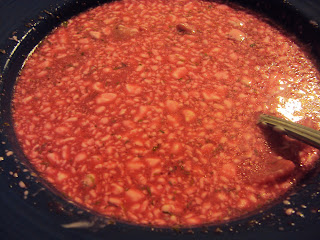
Smacznego!
* A Note about the Broth. The Broth I grew up with for this soup was made from the bones of Pork Cutlets, after my mother would make Kotleti Schabowe. She would cut the bones out before making the Kotleti Schabowe, but some people make the Kotleti bones-in then cut them out before serving and use the bones at that point to make the broth. This way is particularly tasty. But this time, I used Vegetable Broth, as I felt we could use a Vegetarian Day.

The name Barszcz (pronounced "Bahrshch") Czerwony (pronounced "Chehr-VOHN-ih" and meaning "Red") is not the same as Russian Borscht or Ukrainian Borsch, however, they are very similar. The differences are that, in Polish Barszcz Czerwony, it is typically served as, what some call "Czysty" (pronounced "Chih-STih" and meaning "Clean" or "Clear") or "Rosol" (pronounced "Roh-Soow" and meaning "Broth") and is not made with cabbages as an ingredient. At least, those are the differences I have ever noticed.
I don't typically eat Russian Borscht, although I did grow up eating what my mother called "Barszcz Ukrainski" but which had no cabbage. In actuality, it was Barszcz Czerwony served with the vegetables in with the broth, rather than "Czysty". Personally, I don't like it with the vegetables.
Beets are also very good for you. In Poland, it is very common to drink Barszcz Czerwony as soon as you come inside from the cold, as the drink is low in calories, full of vitamins, warms you from the center, and is easy to make. I typically keep either packets of powdered Barszcz Czerwony or a pot of fresh homemade in the refrigerator during the winter, as it also improves with age.
Traditionally, Barszcz Czerwony is made with a "Kwas" (pronounced "Kvahs" and meaning "Sourness" or "Sour Starter"). I plan on making a Barszcz Czerwony in this method next week. In the meantime, the recipe below is meant for just one way you can cook it on a day when you want to eat this soup but don't have the 3 to 4 days planning which traditionally is required for it.
Ingredients:
2 lbs. Beetroots (the smaller, the more tender)
1 Onion or the dark green tips from 1 Leek
2 Carrots
1 Parsnip
1 handful Dried Mushrooms
Water
1 32 oz. Box of Broth (your choice, Chicken, Beef, Vegetable) or equivalent of Homemade Broth *
4 Garlic Cloves
2 Tablespoons Marjoram
2 Allspice Berries
2 Bay Leaves
Salt
Pepper
1-2 tablespoons Sugar or Buckwheat Honey
Either Lemon Juice, Red Wine Vinegar, Barszcz Concentrate, or the Juice from canned beets
Soak the Mushrooms in a cup of warm water.

Wash and scrub the Beets.

Peel.

Chop to the thickness you desire.

Place in pot. I know, I am putting a lot of pictures of Beets but they are so beautiful!

Peel and dice the other Vegetables.

Pour in the Broth, then add enough Water to cover about 3 inches above beets. Add the other Vegetables and the Bay leaves.

Boil until tender.

Squeeze out the water from the Mushrooms. Add the soaking water to the soup. Dice the Mushrooms and add in to the soup. Cook for a bit longer for the flavors to blend.
Take off from the heat. The Spices and the Sour (whichever you prefer, in whichever combination, any combination is delicious) to your taste. Add the Sugar or Honey to your taste.
Pour the liquid into a bowl. Serve with Sour Cream, maybe sprinkle with Curly Parsley or Dill, if you like. You can add Meat or Mushroom Uszki (miniature pierogi), if you like.


Smacznego!
* A Note about the Broth. The Broth I grew up with for this soup was made from the bones of Pork Cutlets, after my mother would make Kotleti Schabowe. She would cut the bones out before making the Kotleti Schabowe, but some people make the Kotleti bones-in then cut them out before serving and use the bones at that point to make the broth. This way is particularly tasty. But this time, I used Vegetable Broth, as I felt we could use a Vegetarian Day.
18 January 2011
Polish Dill Sauce or Sos Koperkowy

Sos (pronounced "Saws" and meaning "Sauce") Koperkowy (pronounced "Kopper-KOV-ih" and meaning "Dill") is a quintessential Polish sauce. It can be paired with many dishes, such as meatballs, mushroom and rice balls, fish, mashed potatoes, and chicken. To many Poles, this sauce tastes like summer. Once you see how delicious and simple it is, I am sure it will become a family favorite.
Ingredients:
3-4 tablespoons Dill (fresh or dry)
2 cups Broth (Vegetable, Chicken or beef, or drippings from meat dish, degreased, or even just water)
2 tablespoons Butter
2 tablespoons Flour
Salt
Pepper
Optional:
2 tablespoons of Lemon Juice (delicious over fish) or
1/2 cup Sour Cream or
3 tablespoons Cream
First, if you are using dried Dill, place it in a bowl and add a 1/2 cup of boiling water to soften it and allow the oils to be released. Set to the side for a few minutes.

Melt the Butter. Add the Flour and begin to stir. This is called the Roux and is the base to most sauces. Also, add pepper at this time.

Once it begins to bubble, add the broth * and stir until bubbly.

Allow to cook for another minute or two, until thickened.

If using dried Dill in the hot water, add now and heat back to bubbling and thickened. Otherwise, remove from heat and add the fresh Dill. If you are using Cream, Sour Cream, or Lemon Juice (but not all together in the sauce!), now is when you would add them. Season with salt to taste.

I served this sauce with Polish Meatballs, Mashed Potatoes and Sweet Peas. Again, if you are wondering whether a picky eater will enjoy this, my children and several picky food friends lap this right up!
* If using drippings from a dish, such as I did with Onion Stuffed Chicken Legs, remove the liquids from bottom of baking or frying pan and place in freezer or refrigerator for a few minutes until grease is at top of liquid. Use spoon to carefully scoop out grease, leaving the liquids underneath.


Smacznego!
Also, some interesting facts about Dill or Koper:
The leaves are collected in the spring and dried.
The seeds are collected in the fall for use as another flavor in cooking.
The typical Polish family garden will usually have this plant growing with their cucumbers.
For those Poles who do not have a garden or who cannot tend their garden every day, Dill is easily and commonly grown in windowsills.
Subscribe to:
Posts (Atom)